The Industrial Vintage Iron Cage Hanging Light Fixture, often simply referred to as an “iron cage pendant,” represents a prominent design element in contemporary interior aesthetics. This type of light fixture draws heavily from the early 20th-century industrial revolution, reflecting a period of robust engineering and functional design. Its resurgence in popularity stems from its ability to integrate into diverse stylistic contexts, offering both illumination and a distinctive visual anchor within a room.
The origins of the industrial fixture are rooted in the practical lighting needs of factories, warehouses, and workshops. During the late 19th and early 20th centuries, incandescent light bulbs became more accessible, and sturdy enclosures were required to protect these fragile bulbs in demanding environments. This necessity gave rise to fixtures characterized by their unadorned aesthetics and durable construction.
Early Industrial Lighting
Early industrial lights Xlightings were designed primarily for function. They featured robust materials such as cast iron, steel, and sometimes brass, chosen for their strength and longevity. Glass enclosures, often ribbed or prismatic, helped to diffuse light and resist impact. The “cage” aspect, in particular, served as a protective barrier against accidental breakage, a common concern in active industrial settings. These fixtures were not intended for aesthetic appeal but rather for efficient and resilient illumination.
Transition to Decorative Element
The transformation of these utilitarian objects into decorative elements began much later, primarily in the late 20th and early 21st centuries. As architectural trends shifted towards appreciating raw materials and exposed structures – a movement often termed “industrial chic” – the inherent beauty of these functional designs became clear. Designers began to recontextualize these fixtures, recognizing their sculptural qualities and their ability to evoke a sense of history and authenticity.
Defining Characteristics of the Iron Cage Pendant
The industrial vintage iron cage hanging light fixture is identifiable by several key design attributes that differentiate it from other lighting types. These characteristics contribute to its distinctive visual presence and its appeal to a broad range of interior design preferences. Understanding these elements is crucial for appreciating its design language.
Materials and Construction
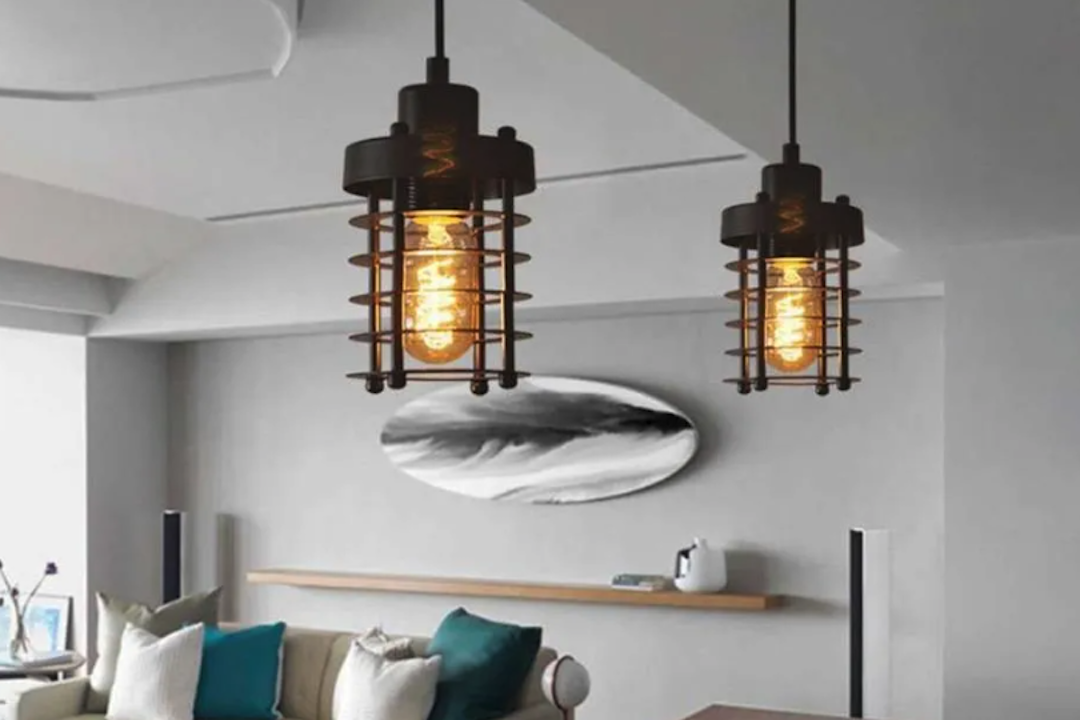
The primary material is typically iron, or steel with an iron-like finish. This choice is fundamental to its industrial aesthetic. The material is often left in a natural, matte, or aged finish, eschewing polished or highly reflective surfaces. The “cage” itself is usually constructed from metal rods or straps, forming an open framework around the light source. This cage can be simple and geometric or more intricate, depending on the specific design.
- Durability: The inherent strength of iron and steel reinforces the fixture’s industrial heritage, suggesting resilience and longevity.
- Finish: Common finishes include matte black, oil-rubbed bronze, distressed silver, or even rusted patinas, all contributing to an aged or well-worn appearance.
- Welding and Rivets: Visible welds or faux rivets are often incorporated to emphasize the construction process and add to the fixture’s authentic industrial feel.
Form and Functionality
The form of these fixtures is generally characterized by a pragmatic simplicity. While the cage offers protection, it also allows the light bulb itself to be a visible component of the design. This often encourages the use of Edison-style bulbs with visible filaments, further enhancing the vintage aesthetic.
- Exposed Bulb: Many designs intentionally feature an exposed light bulb, making the bulb an integral part of the fixture’s visual appeal.
- Adjustable Height: Most hanging fixtures come with adjustable chains or cords, allowing the user to customize the height according to the ceiling height and specific lighting requirements.
- Directional vs. Ambient: While some cage designs allow for a degree of directed light, most serve primarily as sources of ambient or general illumination, casting light broadly throughout the space.
Aesthetic Principles
The aesthetic of the iron cage pendant is rooted in a blend of utility and deliberate imperfection. It embraces the beauty of raw materials and straightforward engineering, often contrasting with more ornate or minimalist design sensibilities.
- Rawness: The fixture often showcases the raw beauty of metal, embracing imperfections and natural textures rather than masking them.
- Minimalism (Functional): While not minimalist in the contemporary sense of extreme simplicity, its industrial roots provide a functional minimalism where form follows function.
- Nostalgia: The design evokes a sense of nostalgia for a past era of manufacturing and craftsmanship.
Versatility in Interior Design
One of the most compelling aspects of the industrial vintage iron cage hanging light fixture is its remarkable adaptability. Far from being confined to industrial-themed spaces, it acts as a versatile design element capable of complementing and enhancing a wide array of interior styles.
Industrial and Loft Spaces
This is the most natural environment for such a fixture. In lofts with exposed brick, concrete, or ductwork, the iron cage pendant seamlessly integrates, reinforcing the existing architectural narrative. It speaks the same language of utilitarian beauty and raw materials.
- Homogeneous Integration: In industrial settings, the fixture blends effortlessly with the existing aesthetic, enhancing the overall theme without being incongruous.
- Authenticity: It adds a layer of authenticity to industrial-themed decor, anchoring the space in its historical context.
Modern and Contemporary Interiors
Surprisingly, the iron cage pendant can serve as an effective counterpoint in modern or contemporary settings. Its rugged simplicity provides a textural contrast to sleek, clean lines and smooth surfaces, preventing the space from feeling too sterile or one-dimensional.
- Textural Contrast: The metallic, often aged texture of the fixture provides a visual and tactile contrast to the polished surfaces and minimalist forms often found in modern design.
- Breaking Monotony: It introduces an element of visual interest and a subtle hint of rebellion against overly structured or homogeneous modern aesthetics.
- “Wabi-Sabi” Influence: In some contemporary contexts, its imperfect nature aligns with the “wabi-sabi” principle, appreciating beauty in imperfection and impermanence.
Farmhouse and Rustic Styles
The rustic charm of a farmhouse or country-style interior also benefits from the addition of an iron cage fixture. Its robust nature and unpretentious finish align well with natural wood, reclaimed materials, and vintage furnishings often found in these settings.
- Grounding Element: It acts as a grounding element, echoing the sturdy, practical nature of farm equipment and traditional craftsmanship.
- Material Harmony: The metal harmonizes with other natural materials like wood, stone, and woven textiles, creating a cohesive, yet varied, sensory experience.
Eclectic and Transitional Spaces
In an eclectic setting, where diverse styles are intentionally mixed, the iron cage pendant can act as a unifying element or a deliberate point of divergence. Its strong character allows it to stand out while also bridging disparate design elements. For transitional spaces, which blend traditional and contemporary features, it offers a visual bridge, neither purely old nor aggressively new.
- Design Anchor: It can serve as a strong design anchor, pulling together disparate elements in an eclectic space.
- Bridging Styles: In transitional decor, it skillfully navigates between the ornate and the minimalist, offering a balanced aesthetic.
Installation and Placement Considerations
The effective integration of an industrial vintage iron cage hanging light fixture extends beyond its aesthetic appeal; practical considerations regarding its installation and placement are paramount. As a heavy fixture, proper mounting and strategic positioning are crucial for both safety and optimal illumination.
Mounting and Support
Due to the weight of metal fixtures, especially those featuring solid iron components, appropriate ceiling support is essential. Standard electrical boxes may not always be sufficient.
- Junction Box Requirements: Ensure the existing electrical junction box is rated to support the weight of the fixture. If not, a fan-rated box or additional blocking may be required.
- Professional Installation: When in doubt, consulting or employing a qualified electrician is advisable to ensure secure and safe installation, adhering to local building codes.
- Chain/Rod Length: The accompanying chain or rod should be adequately strong and properly secured at both the ceiling mount and the fixture itself.
Height and Clearance
The height at which a hanging fixture is suspended significantly impacts both its functionality and its visual impact within a space. This is not a static calculation but rather a dynamic interplay of ceiling height, room function, and surrounding furniture.
- Dining Areas: Over a dining table, the bottom of the fixture should typically be 30-36 inches (76-91 cm) above the tabletop. This allows for ample light without obstructing views or causing glare. This is a common metaphor where the light fixture hovers just above the conversations, illuminating them without becoming a barrier.
- Kitchen Islands: Similar to dining tables, 30-36 inches (76-91 cm) above the island surface is a good starting point. For longer islands, multiple smaller pendants or a single larger fixture may be considered.
- Entryways and Hallways: In these traffic areas, ensure sufficient head clearance. The lowest point of the fixture should ideally be at least 7 feet (2.13 meters) from the floor. This provides a clear path beneath the fixture.
- Open Spaces: In larger, open-plan living areas, the fixture can be hung higher to provide ambient light, acting as a visual beacon in the room’s sky.
Number and Scale
The scale of the fixture relative to the room and other furnishings is a key design principle. An undersized fixture can appear lost, while an oversized one can overwhelm the space.
- Room Size: For larger rooms, a single substantial fixture or a cluster of smaller pendants can be effective. In smaller rooms, a single, appropriately scaled fixture is often best.
- Table/Island Size: For dining tables or kitchen islands, the fixture should ideally be no more than two-thirds the width or length of the surface it hangs above. This visual boundary ensures the light fixture is a companion to the furniture, not its overshadowing giant.
- Clustering: For a more dramatic effect, consider clustering multiple identical or complementary iron cage pendants at varying heights. This creates a striking focal point and can enhance the layer of light in a room.
Maintenance and Longevity
The robust nature of the industrial vintage iron cage hanging light fixture generally necessitates minimal maintenance, a testament to its utilitarian origins. However, periodic care contributes to its longevity and sustained aesthetic appeal.
Cleaning and Care
Unlike more delicate fixtures, these designs tolerate regular, straightforward cleaning.
- Dusting: Regular dusting with a soft, dry cloth or a feather duster is usually sufficient to maintain its appearance. Dust acts as a veil, slowly dimming the fixture’s presence.
- Spot Cleaning: For more stubborn dirt or smudges, a slightly damp cloth can be used. Avoid abrasive cleaners or harsh chemicals, which can damage the finish, particularly if it’s an aged or distressed patina.
- Glass Elements: If the fixture includes glass panels or diffusers, these can be cleaned with a standard glass cleaner and a lint-free cloth.
Finish Preservation
The appeal of many iron cage fixtures lies in their aged or raw finishes. Protecting these finishes is key to preserving the fixture’s character.
- Avoid Harsh Detergents: Strong cleaning agents can strip away patinas or protective coatings, altering the intended aesthetic.
- Rust Prevention: For fixtures in high-humidity areas (e.g., bathrooms, outdoor covered porches), ensure the finish is designed for such environments. If rust begins to form on non-treated iron, it may require specific rust treatment and sealing to prevent further degradation. This is akin to protecting the skin of the fixture; once compromised, it can spread.
- Bulb Replacement: When replacing bulbs, ensure the fixture is turned off and the bulb has cooled. Handle the fixture gently to avoid bending or damaging the cage elements.
The Industrial Vintage Iron Cage Hanging Light Fixture is more than just a source of illumination; it is a design statement, a nod to industrial history, and a piece that can profoundly influence the character of an interior space. Its enduring appeal lies in its straightforward honesty, its durable construction, and its surprising versatility. By understanding its historical roots, its defining characteristics, and the practical considerations of its integration, one can harness its full potential as a timeless addition to almost any environment.